BANKSY – Das gelüftete Phantom und die Frage nach dem Wert der Unsichtbarkeit

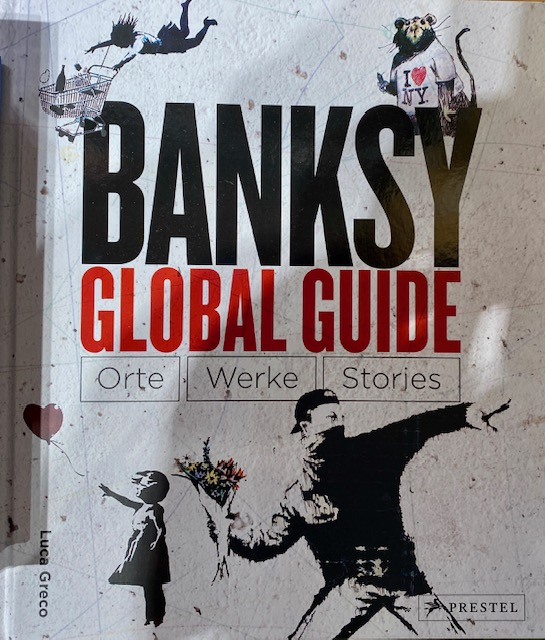
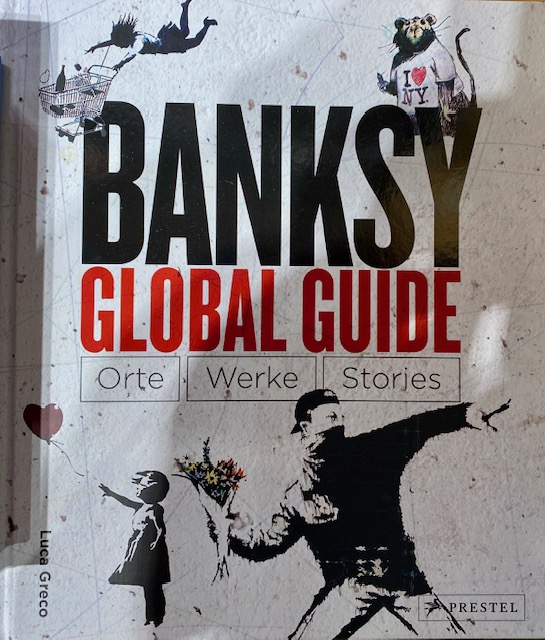
Titelbild: Eigene Aufnahme des „Banksy Global Guide“ (Prestel Verlag), fotografiert in einer Salzburger Buchhandlung. © Christa Linossi 2026

Während die Kunstwelt oft laut, grell und selbstinszeniert auftritt, existiert seit Jahrzehnten ein Gegenpol: ein Phantom, das mit Stille lauter spricht als andere mit Bühnenlicht. Banksy.

Sein berühmter Satz „Unsichtbarkeit ist eine Superkraft“ bekommt für mich eine neue Tiefe. Wahre Relevanz entsteht nicht durch permanente Präsenz, sondern durch den Fokus auf das Wesentliche – auf die Botschaft, nicht auf das Gesicht dahinter.

Wer ist Banksy? Eine Spur verdichtet sich

Seit Jahren wurde spekuliert, wer hinter den ikonischen Schablonenbildern steckt, die weltweit an politisch brisanten Orten auftauchen. Nun berichtet die Nachrichtenagentur Reuters nach umfangreichen Recherchen, dass vieles auf Robin Gunningham hindeutet – ein Name, der bereits früher im Raum stand. Zwischendurch soll Banksy auch unter dem Alias David Jones agiert haben, um seine Identität weiter zu verschleiern.

Ob endgültig bewiesen oder nicht: Die Spur ist so konkret wie nie.

Warum die Marke Banksy funktionierte

Banksy verstand etwas, das viele Künstler unterschätzen: Anonymität ist kein Mangel – sie ist ein Konzept.

Er setzte seine Werke nicht in Galerien, sondern in den öffentlichen Raum. Nicht dort, wo Kunst erwartet wird, sondern dort, wo sie stört, irritiert, aufrüttelt.

Seine Sammler waren keine klassischen Kunstmarktakteure. Sie investierten nicht nur in ein Bild, sondern in ein Narrativ: das Mysterium, die Rebellion, die Unverfügbarkeit.

Der Marktwert stieg rasant – nicht trotz, sondern wegen der Unsichtbarkeit. Das Bild war nicht der Preis. Der Mythos war der Preis.

Was passiert, wenn das Phantom einen Namen bekommt?

Nun stellt sich die entscheidende Frage: Was geschieht mit einer Marke, deren Kern die Unsichtbarkeit war, wenn plötzlich ein Name im Raum steht?

Kunstökonom Magnus Resch formuliert es treffend: „Banksy hat die Kunstwelt revolutioniert. Jeder kennt seine Werke, aber niemand kannte sein Gesicht – bis jetzt. Und genau das macht die Zukunft seines Marktwertes so spannend.“

Zwei Wege tun sich auf:

  • Er bleibt im Untergrund, arbeitet weiter wie bisher – dann könnte der Marktwert sinken, weil das Mysterium bröckelt.
  • Er tritt in den institutionellen Kunstbetrieb ein – Galerien, Museen, große Häuser. Dann könnte er sich dauerhaft im Millionenbereich etablieren.

England liebt seine Phantome. Nach Jack the Ripper hat das Land nun ein zweites – nur dass dieses Phantom Kunst statt Angst verbreitet.

Ein Buch, das Banksys Welt öffnet – ohne sie zu entzaubern

Es gibt mehrere Publikationen über Banksy, darunter ein besonders spannender Band aus dem Prestel Verlag. Er führt zu über 170 Orten weltweit, an denen Banksys Werke entstanden – oder verschwunden sind. Der Guide zeigt nicht nur die berühmten Motive, sondern auch die Leerstellen: zerstörte, übermalte, entfernte Arbeiten. Ein stiller Hinweis darauf, wie vergänglich Street Art ist – und wie lebendig.

Was ich als Künstlerin daraus ziehe
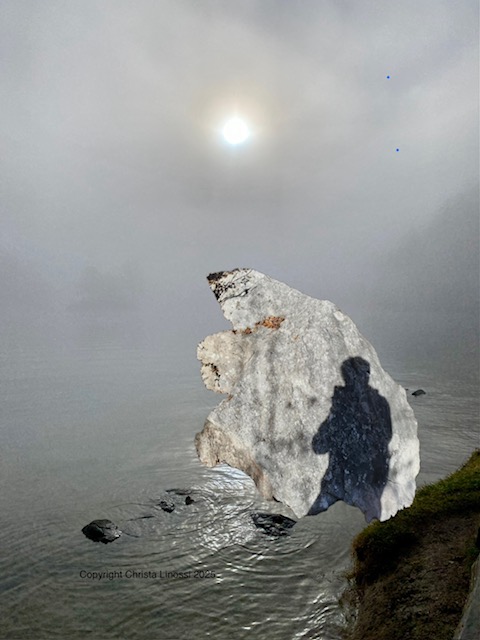
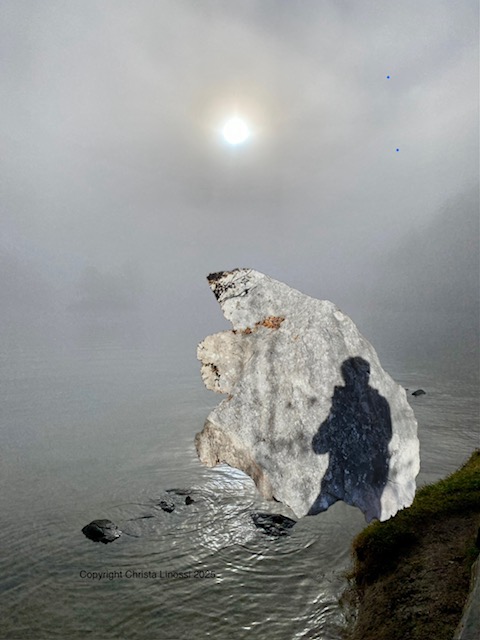
Handcrafted Photography — no AI, no Photoshop. From the series “Nebel”. Neueste Arbeit © Christa Linossi 2025

Banksy erinnert mich daran, dass Kunst nicht durch Institutionen definiert wird, sondern durch Haltung. Es geht nicht um die Worte von Kuratoren, Galeristen oder Museen. Es geht darum, wie unabhängig ich arbeite, welche Stimme ich erhebe, welchen Spiegel ich der Welt hinhalte.

Kunst ist kein Dekor. Kunst ist ein Kommentar. Banksy beherrschte diese Sprache meisterhaft.
BANKSY – The Unmasked Phantom and the Question of the Power of Invisibility

Title image: My own photograph of the “Banksy Global Guide” (Prestel Publishing), taken in a Salzburg bookshop. Foto: © Christa Linossi 2026

While the art world often thrives on noise, spectacle, and self‑promotion, one figure has spent decades proving the opposite: a phantom whose silence spoke louder than any spotlight. Banksy.

His famous line “Invisibility is a superpower” takes on a new resonance today. True relevance does not arise from constant visibility, but from the ability to focus on what matters – the message, not the face behind it.

Who is Banksy? A trail that grows sharper

For years, speculation circled around the identity of the world’s most influential street‑art artist. Now, after extensive research, the news agency Reuters reports that much points to Robin Gunningham – a name long whispered in the background. At times, Banksy is said to have used the alias David Jones to further protect his anonymity.

Whether definitively proven or not, the clues have never been this concrete.

Why the Banksy brand worked

Banksy understood something many artists overlook: Anonymity is not a limitation – it is a concept.

He placed his works not in galleries, but in the public sphere. Not where art is expected, but where it disrupts, irritates, provokes.

His collectors were not the traditional art‑market elite. They invested not only in an artwork, but in a narrative: the mystery, the rebellion, the refusal to be owned.

His market value soared – not despite his invisibility, but because of it. The artwork was not the price. The myth was the price.

What happens when a phantom gains a name?

Now the crucial question arises: What becomes of a brand built on invisibility when a name suddenly enters the room?

Art economist Magnus Resch puts it succinctly: “Banksy revolutionized the art world. Everyone knows his works, but no one knew his face – until now. And that makes the future of his market value fascinating.”

Two paths lie ahead:

  • He continues underground, working as before – then the market value may decline as the myth erodes.
  • He enters the institutional art world – galleries, museums, major venues – and could stabilize his multimillion‑dollar status.

England has always loved its phantoms. After Jack the Ripper, the country now has another – only this one spread art instead of fear.

A book that opens Banksy’s world without demystifying it

Among the publications about Banksy, one particularly compelling volume from Prestel stands out. It guides readers to more than 170 locations worldwide where Banksy’s works have appeared – or disappeared. The book highlights not only the iconic pieces but also the empty spaces: destroyed, removed, or vanished works. A quiet reminder of the fragility and transience of street art.

What I take from this as an artist

Banksy reminds me that art is not defined by institutions, but by integrity. It is not about the words of curators, galleries, or museums. It is about how independently I work, what voice I raise, what mirror I hold up to the world.

Banksy – the world’s most famous street art phantom – may finally have a name. But what happens when an artist whose greatest strength was invisibility suddenly becomes identifiable? A reflection on myth, market value, and the power of staying unseen.
Handcrafted Photography — no AI, no Photoshop. From the series “Nebel”. Neueste Arbeit © Christa Linossi 2025

Art is not decoration. Art is commentary. Banksy mastered this language with precision and courage.